
Jesus was a political figure in his own time, says the Very Rev. Greta Getlein, dean of the Cathedral Church of Saint Paul in Burlington. But this is not widely understood, and that may be where the trouble begins for preachers contemplating their sermons at the height of a presidential campaign.
Should they speak about issues that are weighing heavy on many minds? Should they hew closely to the appointed readings, and preach only on the themes the lectionary gives them? Or should they avoid politics entirely, either to keep peace in the congregation or to preserve the church as a refuge from the secular culture?
The answer can depend in part on the preacher, in part on the congregation, and in part on what is often an unspoken understanding between them.
“I think the worst thing a preacher can do is change the way they preach around a political season,” Getlein says. “If you always preach with political nuance and focus on the teachings of Jesus, which were very political, then you shouldn’t have to change what you are doing around an election season.
“My approach is to always preach the gospel and to highlight very clearly what we are taught by Jesus about love. … I feel like the gospel imperative is crystal clear. … If [a candidate is] moving us in the direction of compassion and love, then I’m in.”
Still, she says, she would never mention candidates by name from the pulpit for fear of making people who disagree with her feel they have no place in the congregation. Many of her colleagues agree with her.
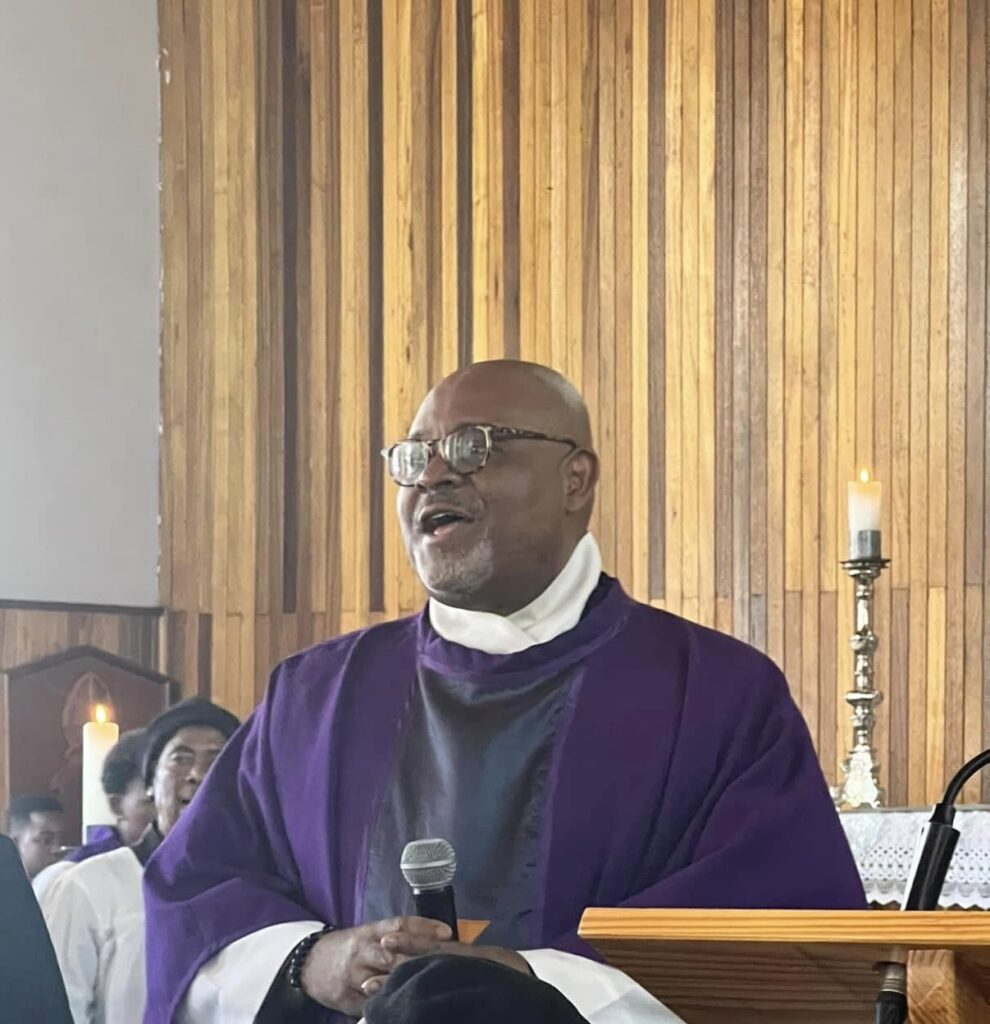
“I’ve never mentioned a politician by name in 20-some years”, says the Rev. Walter Brownridge, transitional priest at Christ Church, Montpelier. “But I have mentioned the consequences of policies and statements that have been made.”
After the state’s decision to scale back its emergency housing program led to hundreds of motel evictions, Brownridge, the parish’s two deacons and its senior warden have all preached “about caring for all members of a community,” he says.
“On issues that affect people and aren’t directly partisan, but are political in the sense they affect how a society is ordered, I am fairly comfortable preaching from what the scriptures and our theological reflection tells us,” Brownridge says.
He recalls one of his mentors talking about a Sunday when he preached on the Beatitudes, only to be told afterwards that the sermon was unnecessarily political.
“He said, ‘Your complaint is not really with me. It seems to be with Jesus,’” Brownridge recalls. “And that is kind of my approach. I am not telling you who to vote for, but I hope you will vote your values, values expressed in the teaching of Jesus to care for the least and lost, or in the words of the prophets, such as Micah, who bid us ‘to do justice and to love kindness, and to walk humbly with your God.’”
The Rev. Earl Kooperkamp, rector of Good Shepherd, Barre, is also careful about preaching politics. “People in general are not coming to hear political views,” he says. “They are giving God thanks for their blessings and figuring what God wants them to do with their lives.”
But this is not to say that people don’t want to reflect on difficult issues with political implications in the light of their faith. To make sure he doesn’t bring his own politics into the pulpit, Kooperkamp asks himself a simple question: “If it is not in the lectionary, why do I have a reason for bringing this into the sermon?”
Yet there are times when the scriptures do lend themselves to political interpretations. “Maintain justice and do what is right,” Kooperkamp says, quoting Isaiah 56:1. And there are other times when devastating community events — such as a mass shooting or a natural disaster — call for theological reflection on issues including gun control and climate policy.
“I always ask ‘How are we going to make a witness?’” he says. “The media might say one thing. Popular culture might say one thing. But what do we say?”
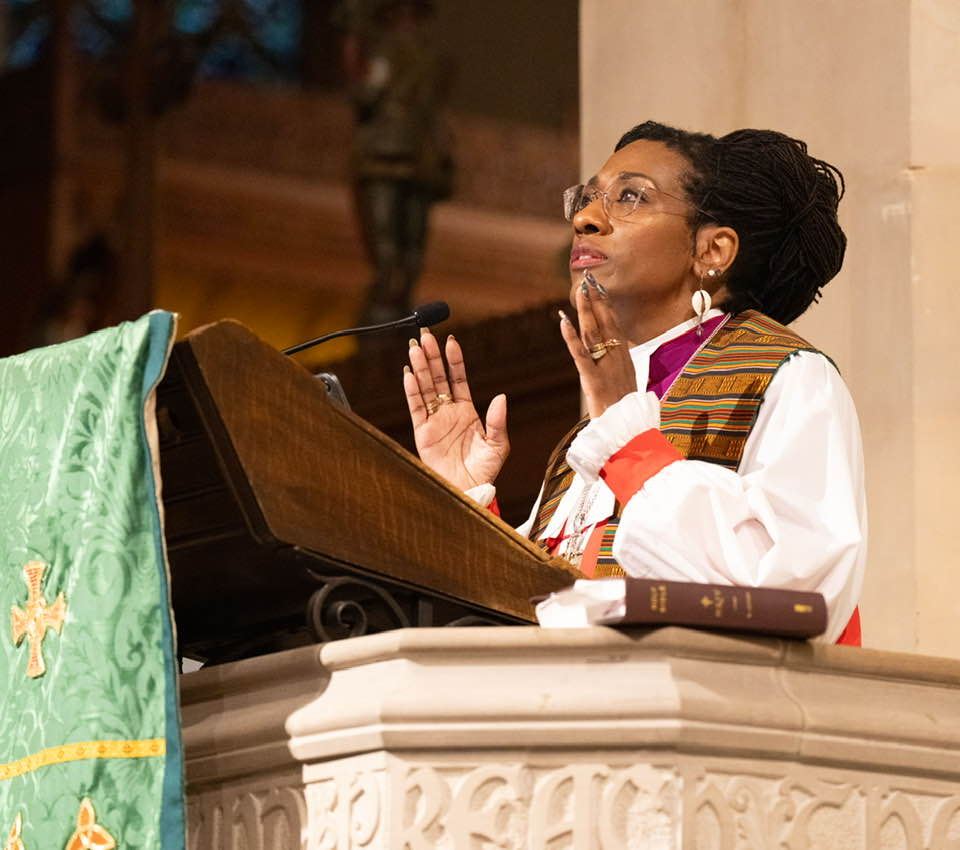
Bishop Shannon MacVean-Brown says her training as a community organizer has shaped her sense of her responsibilities as a preacher. “We have power as individuals, and we have to learn to use it well,” she says. “Talking to people about the stewardship of their votes is a way to exercise ministry.”
Before becoming a bishop, she often exercised her ministry in Black and marginalized communities. “It was a different kind of conversation there,” she says. “It was more about our own liberation,” even when she served a community that was “fairly privileged.”
The issues of asylum and immigration cut particularly close to the quick for her. “I don’t try to upset people,” she says, “but I don’t want to be meeting my maker and being asked, ‘Why didn’t you say anything about children being taken away from their families on the border? What stopped you from talking?’”
She remembers a young Latino acolyte at one of her previous churches looking at her and asking if the government was going to take his mother away.
“I had to say something to them,” she says. “They are wanting me to give them some reassurance, and I didn’t know what to say to them except that we will do whatever we can and we will take risks because you are part of this community of faith.
“Maybe you can go through life and not say these things, but because I am a Black woman and I occupy a space of religious leadership and I don’t say something that’s really clear, then people might start to wonder … if their experience is as bad as it appears to them. In those cases, it’s malpractice for me not to say certain things. I will cross certain lines people think I shouldn’t. If I see people hurting and if I don’t say something, I contribute to further damage to them.
“I will make enough mistakes,” she says. “But there are somethings where I can’t help myself. It’s like a fire shut up in my bones. I feel compelled to speak clearly about how injustices can be remedied by our votes.”
While preaching on politics presents difficult choices, church leaders have other ways of ministering to their congregations during an election season. Getlein says in her interfaith clergy group, “we are all planning vigils, opening our doors during election time for people to just have a quiet place to be if they choose to do that,” she says.
To those seeking a different sort of outlet for their religious convictions, she recommends the Baptist Joint Committee’s resources on resisting white Christian Nationalism.
“I think all of that is fair game,” she says, “because it’s directly related to the gospel message.”